Enterococcus faecalis: The Hospital Survivor and Opportunistic Pathogen

Enterococcus faecalis is one of the most important opportunistic pathogens encountered in modern clinical microbiology. It is a major cause of urinary tract infections, infective endocarditis, bacteremia, wound infections, and multidrug-resistant hospital outbreaks.
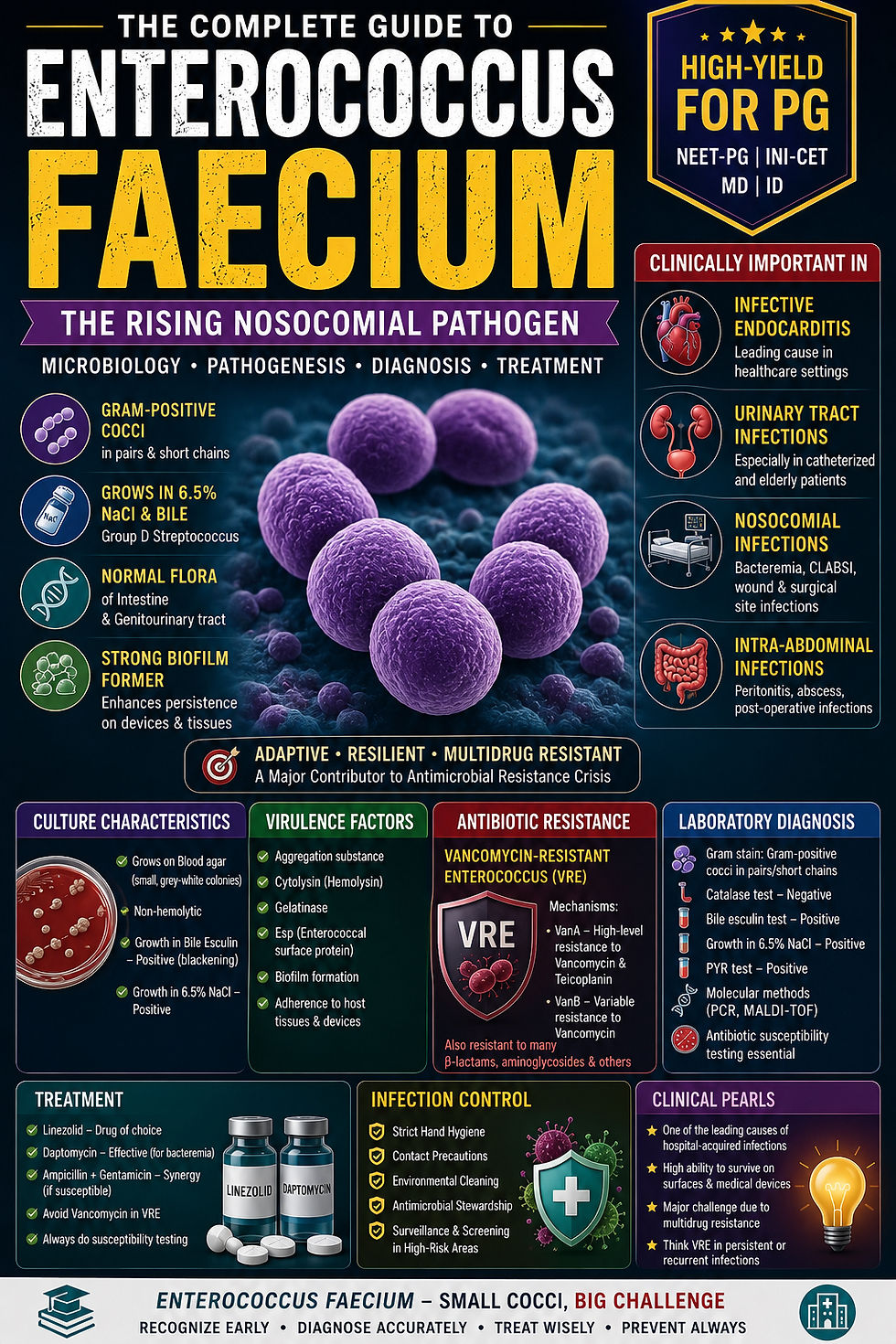
Morphology
• Gram-positive cocci
• Pairs and short chains
• Catalase negative
• Facultative anaerobe
• Non-spore-forming
Culture Characteristics
• Bile esculin positive
• Growth in 6.5% NaCl
• PYR positive
• Usually non-hemolytic
These features help differentiate enterococci from streptococci.
Virulence Factors
• Biofilm formation
• Aggregation substance
• Cytolysin
• Gelatinase
• Surface adhesins
These promote persistence and hospital survival.
Diseases Caused
• Urinary tract infections
• Infective endocarditis
• Bacteremia
• Intra-abdominal infections
• Catheter-associated infections
• Wound infections
Antibiotic Resistance
• Intrinsic cephalosporin resistance
• High-level aminoglycoside resistance
• Vancomycin-resistant enterococci (VRE)
VRE mediated mainly by vanA and vanB genes.
Treatment
• Ampicillin
• Vancomycin
• Linezolid
• Daptomycin
Combination therapy is often required in severe infections.
Clinical Pearls
• Important nosocomial pathogen
• Survives harsh environments
• Common in catheterized patients
• Biofilm formation complicates treatment
Conclusion
Enterococcus faecalis is a major multidrug-resistant opportunistic pathogen with increasing clinical importance worldwide. Understanding its resistance mechanisms and diagnostic features is essential in modern microbiology and infectious disease practice.


Comments